
With share markets near record highs and almost every headline mentioning artificial intelligence, one of the most common questions we've been hearing lately is a simple one: are we in a bubble?
It's a fair question, and one our Investment Committee has been weighing carefully. Here's how we see it, and what it means for you.
Is this another dot-com bubble?
The short answer is that we don't think so, at least not in the way most people remember it. Back in 2000, share prices ran up to extreme levels on little more than excitement about the internet, and many of the companies involved had no real profits to show for it. When that enthusiasm faded, prices had a long way to fall.
Today is different. Yes, share prices are high, and the big technology and AI companies are the main reason. But this time those companies are genuinely making money, and a lot of it. Their profits have been growing strongly, and that is what has been pushing prices up. Prices are stretched, but nowhere near the extremes we saw in 2000.
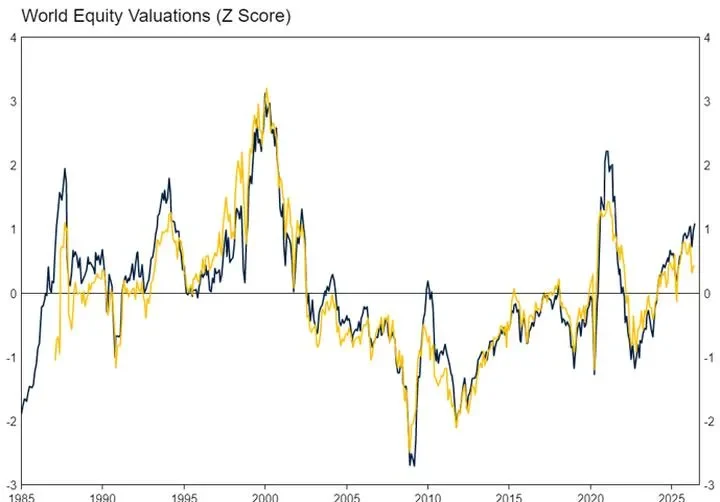
Global share valuations measured against their own history (higher = more expensive). The peak around 2000 was the dot-com bubble; today sits well below it.
Different parts of the market, different stories
The "AI" label covers a few very different types of company, and they are not all in the same boat.
At the front end are the model builders - the firms behind tools like ChatGPT. They are likely to be worth staggering amounts when they eventually list, but they will only ever make up a small slice of the sharemarket, so most investors won't own much of them directly.
Behind them are the big technology companies - Microsoft, Amazon, Google and Meta - that are spending enormous sums building the computing power AI runs on. They have gone from sitting on piles of cash to borrowing and raising money to fund it.
Then there are the "picks and shovels" makers - the chip, memory and equipment companies that supply the hardware. These have run very hard and look expensive against their own history, though their profits have been exceptional. Software companies, by contrast, have gone the other way and actually look cheaper than usual.
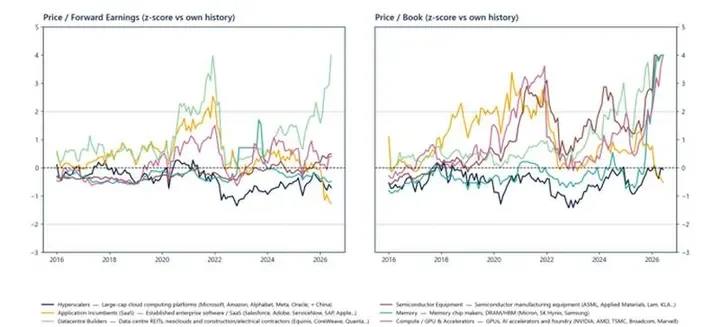
Each part of the AI market is valued differently against its own history - chip and memory makers look stretched, while software looks more reasonable.
Where the growth is coming from
Most of the earnings growth the market is expecting over the next year or so comes from this AI complex - and within it, the standout is memory chips. Memory is really the 2026 story: demand has run well ahead of supply, and that is where the biggest jump in profits is expected, before it levels off as new supply comes online.
The next standout group is the big chip designers and makers - the likes of Nvidia, Broadcom and TSMC - where profits are expected to grow at around 35% a year over the next three years.
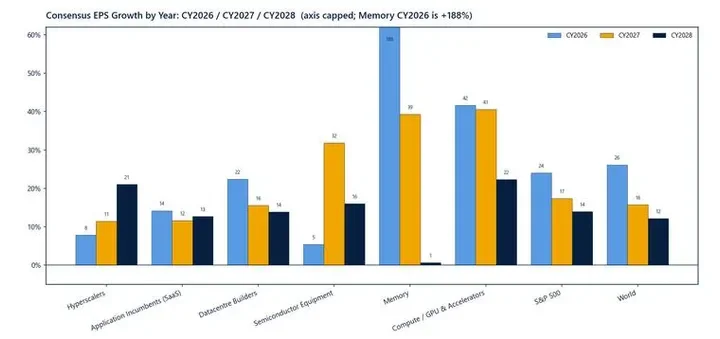
Expected profit growth by part of the market. Memory chips dominate the near term (its 2026 figure runs off the top of the scale), with the big chipmakers close behind.
Is all that spending justified?
It is the big technology companies funding most of this build-out, so they are the ones most exposed if it doesn't pay off - everyone else has already been paid. The reassuring part is that their cloud businesses have been growing revenue at 30 to 40% a year, which goes a long way to justifying the spend. And it is not all about AI - McKinsey estimates about half of today's computing demand is ordinary cloud computing, which the world needs more of regardless.
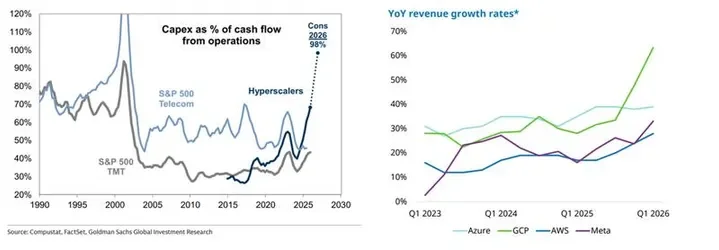
The big technology companies' cloud revenues have kept growing 30-40% a year (right), even as their spending has climbed as a share of cash flow (left).
Demand for AI computing itself is forecast to grow more than twentyfold by 2030. And while the spending looks enormous, as a share of the economy it is actually smaller than past nation-building efforts like the railways or the rollout of electricity.
The honest catch is timing: on current growth assumptions, all this investment doesn't fully pay for itself until the early 2030s. So it will weigh on profits in the meantime - but if the demand shows up, the payoff on the other side should be substantial.
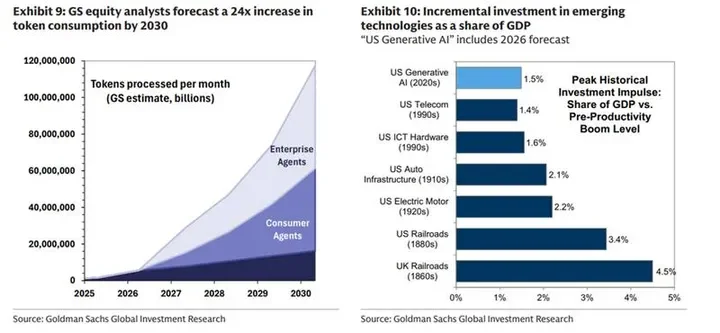
Left: forecast growth in AI computing demand to 2030. Right: today's AI investment versus past build-outs as a share of the economy - smaller than the railways or electricity.
So what would cause a fall?
This is the key point. If markets do come unstuck, it almost certainly won't be because prices are simply "too high" on their own. It will be because those strong profits stop coming through. In other words, the thing to watch isn't the price tag, it's whether company earnings keep up with expectations.
The main risk is that all the money being poured into AI doesn't pay off as quickly as hoped, or that demand for it disappoints. Those are genuine risks worth keeping an eye on, but they are a very different thing from a classic speculative bubble.
Portfolio Positioning
Our portfolios are currently sitting at a neutral growth setting, and within that we've balanced things out by spreading our exposure beyond the AI names into other investment styles and regions.
Bubbles can take a long time to inflate, so even if we thought we were in one, there would be no rush to act. If this is a bubble and the market climbs to the kind of extremes we saw in the dot-com era, there is a lot of potential upside still to come before any downturn. And if company earnings keep meeting expectations, markets should keep moving higher, so staying invested to share in that is the right call.
Rather than cutting back our growth exposure over bubble fears today, we think the more prudent approach is to keep a close eye on earnings, both actual and forecast. Earnings have anchored the market, and it won't fall back unless those earnings expectations do.